 a SaunaShare company

Quick answer
There are three ways to heat a sauna: hot stones (the traditional Finnish sauna, fired by electricity, wood, gas or smoke), infrared panels, and a steam generator, which makes a steam room rather than a sauna. A Finnish sauna runs about 176 to 212°F at 10 to 20% humidity, and you make steam by ladling water on the stones. Steam rooms sit around 110°F at 100% humidity. Barrel, cube, indoor and tent saunas are shapes, not types. Of the 323 public saunas on SaunaShare that list a heat source, 256 (79%) run a traditional stove. For a home, that is the one we’d buy too.
Most “types of saunas” lists mix up two different questions: how the room gets hot, and what the building looks like. Sort those out and the choice gets simple. Pick the heat first, because it decides what a session feels like. Then pick the shape that fits your yard, garage or basement. We know what works from running SaunaShare and from working with commercial bathhouse operators since 2018, and both founders run saunas at home, so this list comes with opinions.
Every type of sauna, side by side
Types of saunas compared
| Type | How it heats | Room temperature | Steam (löyly)? | Power and setup | Best for |
|---|---|---|---|---|---|
| Traditional electric | Electric heater full of stones | 176 to 212°F at head height | Yes, ladle water on the stones | 240V hardwired, licensed electrician | Most homes, indoors or out |
| Wood-burning | Wood stove full of stones | 176 to 212°F | Yes | No electrical service; a chimney and firewood | Off-grid and backyard purists |
| Smoke sauna | A big stone stove with no chimney; smoke is vented before bathing | Traditional Finnish heat | Yes | Hours of firing; a dedicated outbuilding | Bucket-list visits, not most homes |
| Gas-fired | Gas burner heating stones | Traditional heat | Yes | Gas line and venting | Some public bathhouses |
| Infrared | Panels that warm your skin directly | Air stays cooler; Finnmark rooms cut out at 170°F | No | Small rooms often plug into 120V | Heat-sensitive users, small indoor spaces |
| Hybrid | Infrared panels plus a stone heater | Either mode | Yes, on the heater side | Separate circuits for each system | Households split between the two |
| Steam room | Steam generator | About 110°F | The whole room is 100% humidity | Waterproof tiled room, drain, generator | Spas; it isn’t a sauna |
Finnish sauna and steam-room figures come from a 2024 review of passive heat therapies, which also notes that Finnish saunas are the most widely studied of all of them. The infrared ceiling is from Finnmark’s manual: its infrared panels shut off above 170°F.
Traditional (Finnish) saunas: stones, heat and steam
This is the sauna the word means. A heater full of stones heats the room to roughly 176 to 212°F at the level of your head, with the floor much cooler, and the air stays dry, around 10 to 20% humidity, until you throw water on the stones. That burst of steam is löyly, and it is the part people fall for. Only a stone heater can do it. The fuel underneath is a separate choice:
- Electric. The most common home sauna. You set a temperature and walk away. A full-size heater needs a 240V hardwired circuit, and a licensed electrician wires it. A few very small heaters run on 120V, but they are the exception.
- Wood-burning. The answer to the “non-electric sauna” question. No electrical service, a crackling stove and soft, rolling heat, in exchange for firewood, a chimney and time to fire it. It is also what most mobile saunas run: on SaunaShare, 126 of the 149 mobile saunas listed are wood-fired.
- Gas. Rare at home. On SaunaShare, 11 public venues list gas.
- Smoke sauna (savusauna). The oldest kind. A big stove with no chimney heats a mass of stones for hours, the smoke is vented, and then you bathe. Only four venues on SaunaShare list one, including Finland’s Jämsän Saunakylä sauna village. Visit one; don’t plan to build one.

Infrared saunas: warm skin, cooler air
An infrared sauna skips the stones. Panels on the walls give off infrared light that warms your body directly, so the air stays much cooler. In Finnmark’s rooms the panels shut off above 170°F; you can start a session after a 15 to 20 minute warm-up, though the room takes about an hour to reach its maximum. No stones means no steam.
The “types of infrared sauna” you see advertised are the wavelengths the panels emit:
- Far infrared: the kind used in the Japanese Waon therapy studies and in most infrared research.
- Near infrared: shorter wavelengths, closer to visible light.
- Full spectrum: panels that combine near, mid and far.
How does it compare on heat? In a 2025 head-to-head trial, 45 minutes in a far-infrared sauna at 113 to 149°F didn’t raise core temperature at all, while three 10-minute rounds in a traditional sauna at 176°F did. We break that trial and the rest of the evidence down in infrared vs traditional saunas.
Hybrid saunas
A hybrid puts infrared panels and a stone heater in one room. It suits a household where one person wants gentle heat and another wants löyly. The cost is two electrical systems: Finnmark’s FD-5 hybrid, for example, needs two 240V circuits, one for the infrared and one for the heater. Most infrared panels aren’t built for traditional sauna temperatures, so don’t plan to add a stone heater to an infrared-only room later without the maker’s OK.
Steam rooms are not saunas
A steam room (hammam, steam bath) is a tiled room filled with steam from a generator: about 110°F at 100% humidity. It needs a waterproof room, a floor drain and a generator, which makes it a bathroom project, not a sauna project. On SaunaShare, 60 of the public venues that list a heat source have steam, nearly all of them bathhouses and spas.
Sauna shapes: barrel, cube, indoor, tent
Once you know the heat, the building is about space, looks and how long you want it to last.
- Barrel saunas. Round staves, quick to assemble, a classic backyard look. The walls are a single layer of wood that faces weather outside and heat inside, so wood choice matters more here than anywhere. We used to sell cheaper conventional-wood barrel kits at Sauna Marketplace, our sister store. Supporting them taught us that repeated swelling and shrinking can work a barrel’s joints apart, and a couple of years later the owner thinks the heater is broken when the real problem is heat escaping through gaps and cracks. That is why we insist on thermally modified wood for barrels. More in the best wood for a sauna.
- Cube and modern outdoor saunas. Square or rounded-square rooms, often with a glass front and a porch. More standing room and a flat ceiling for a proper upper bench. A cofounder still owns the first Thermory Square sent to North America, near Bend, Oregon, and it has been our test bench ever since.
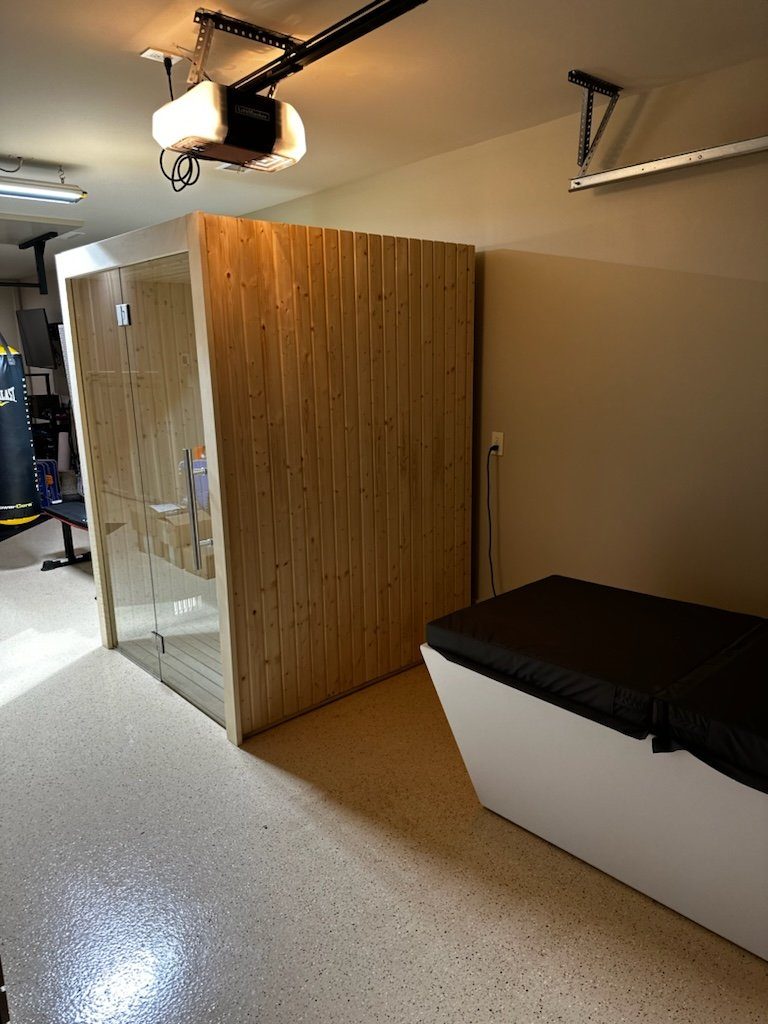
- Indoor kits and rooms. Built into a basement, garage or bathroom, from a prebuilt kit or from wall boards, a heater and a door. Indoors, the heater and electrician are the main work.
- Tent and portable saunas. A tent with a small wood stove you can carry. One of our founders uses a portable tent sauna more than his indoor sauna these days. He carries it down to a creek and uses the creek as his cold plunge between rounds.
- Mobile saunas. A sauna on a trailer. They make up 149 of the 428 public saunas listed on SaunaShare, mostly wood-fired. Great for a pop-up by the water; at home, a fixed sauna is easier to live with.
What the people who run saunas actually choose
Bathhouses and community saunas live or die on whether guests come back, so their heat choice is a useful vote. From SaunaShare listings, November 2026, 323 of 428 public saunas and bathhouses say how they heat:
Heat source at public saunas listed on SaunaShare (323 venues that list one; venues can have more than one)
| Heat source | Venues | Share |
|---|---|---|
| Any traditional stove (wood, electric, gas or smoke) | 256 | 79% |
| Wood-fired | 197 | 61% |
| Steam room | 60 | 19% |
| Electric stone heater | 54 | 17% |
| Infrared | 37 | 11% |
| Infrared with no traditional sauna | 26 | 8% |
Split it by venue and the pattern is sharper. Infrared shows up almost only in bathhouses (30 of the 37). Every one of the 45 community saunas and all 134 mobile saunas that list a heat source run a traditional stove, and not one lists infrared. The places built purely around sauna chose stones.
Which type of sauna is best for health?
The strongest health data is for the traditional Finnish sauna, because that is what the big studies used. In a 20-year study of 2,315 Finnish men, those who used the sauna 4 to 7 times a week had a lower rate of sudden cardiac death than those who went once a week, and sessions over 19 minutes did better than those under 11. It is an observational study, so it shows an association, not cause and effect. Infrared has its own, smaller evidence base, strongest in heart failure patients; our infrared vs traditional guide covers it.
Former Navy SEAL and physician Dr. Kirk Parsley gave Brian Cain a simple starting point for a traditional sauna on the Mental Performance Mastery Podcast: about 20 minutes after a workout, at a temperature that is challenging but tolerable. His words for the dose: “start at 165, work your way up as you increase your tolerance.” That is a stone-heater number. Finnmark’s infrared rooms top out at 170°F, just above it.
If you also plunge, the order matters: see sauna and cold plunge order and Dr. Parsley’s full advice in cold plunge before or after a workout.
Safety
Hydrate, skip alcohol before and during, and get out when you feel dizzy, not after. If you have heart disease or low or high blood pressure, or you are pregnant, ask your doctor before regular hot sessions or hot-and-cold contrast.
FAQ
What are the different types of saunas?
By heat source: traditional Finnish saunas with a stone heater (electric, wood-burning, gas or smoke), infrared saunas, and hybrids with both. Steam rooms are often listed too, but they are a different room. By shape: barrel, cube or modern outdoor, indoor kits, tent and mobile saunas.
What type of sauna is best for health?
The traditional Finnish sauna has the most evidence, including a 20-year study of 2,315 Finnish men linking 4 to 7 sessions a week with lower cardiac death risk. Infrared has smaller studies, strongest in heart failure patients who are treated at gentler heat.
What is the best type of sauna for a home?
For most homes, a traditional electric sauna with a properly sized stone heater, indoors or in a well-built outdoor kit. Choose wood-burning if you want to stay off the grid, and infrared only if high heat or a 240V circuit is a dealbreaker.
What is a non-electric sauna?
A wood-burning sauna. A wood stove heats the stones, so it needs no electrical service, just a chimney, firewood and time to heat up. Most mobile and tent saunas work this way.
What are the types of infrared saunas?
Far infrared, near infrared and full spectrum, named for the wavelengths the panels give off. Far infrared is the kind used in most infrared sauna studies. None of them make steam.
Is a steam room a type of sauna?
Not really. A sauna is dry heat around 176 to 212°F with steam you add by ladling water on stones. A steam room holds about 110°F at 100% humidity from a steam generator.
Sources
- Laukkanen JA et al. The multifaceted benefits of passive heat therapies for extending the healthspan: A comprehensive review with a focus on Finnish sauna. Temperature (Austin), 2024. Source
- Atencio JK et al. Comparison of thermoregulatory, cardiovascular, and immune responses to different passive heat therapy modalities. Am J Physiol Regul Integr Comp Physiol, 2025. Source
- Laukkanen T et al. Association between sauna bathing and fatal cardiovascular and all-cause mortality events. JAMA Intern Med, 2015. Source