Now part of the SaunaShare family.A new chapter. Coming 2028.

Cold plunge benefits, backed by research.

A better mood, more drive, faster recovery and early signs of a testosterone lift. We read the studies behind every benefit and show you exactly what each one found.
Reviewed 31 sourcesGeneral information, not medical advice

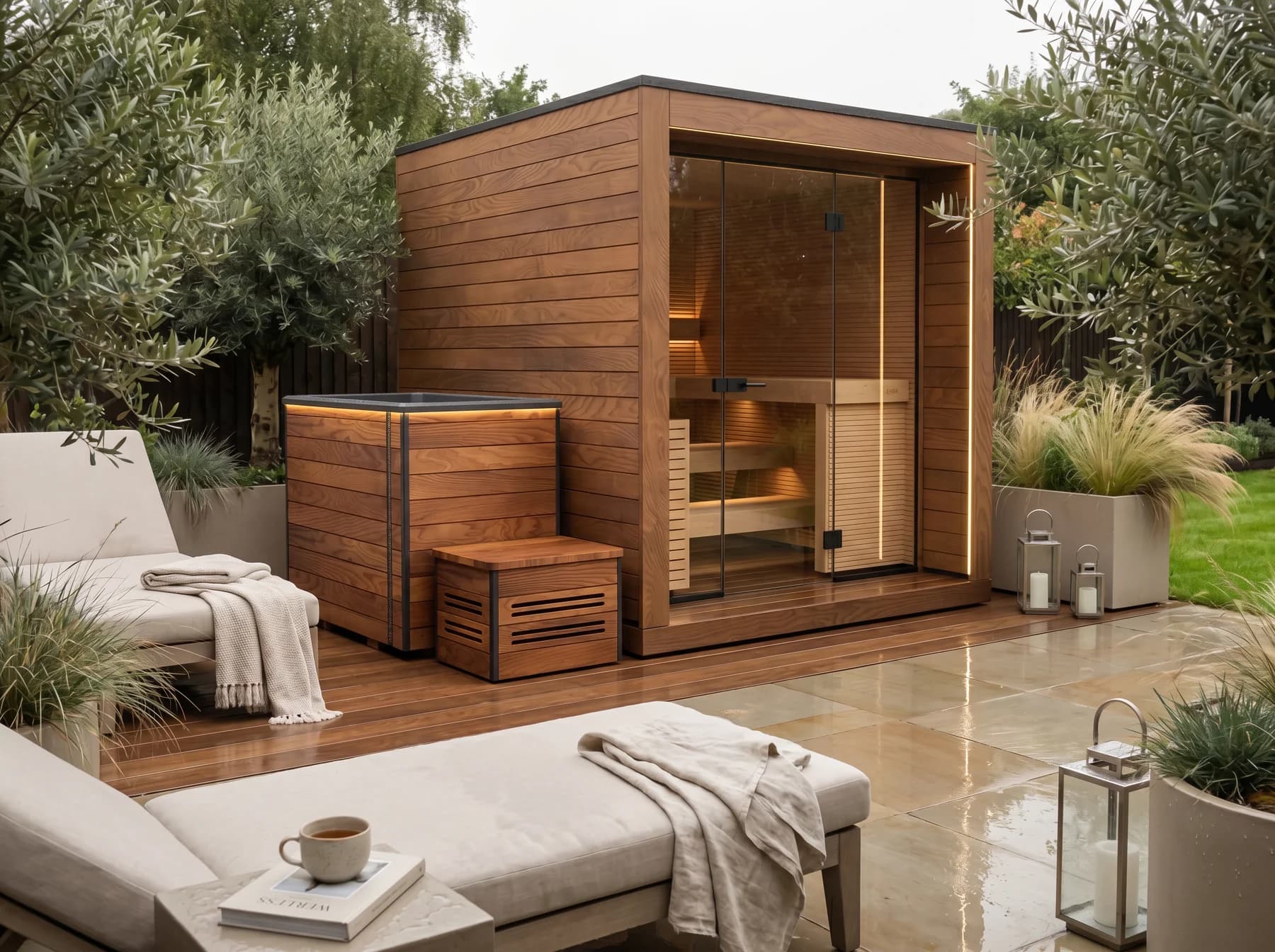
Wood-clad Auroom cold plunge beside a glass-front outdoor sauna on a rain-wet patio
Cold water, next to the heat. Auroom.

The short answer

What the research shows.

A better mood, fast

5 min

In a 2026 trial of adults with low mood, five minutes in seawater at about 56°F lifted mood as much as twenty. The control group didn’t change.1

Mood measured right after the dip.

More drive

250%

More dopamine, the chemical behind motivation and reward, in the blood of young men who sat in 57°F water.5

One hour at 57°F. Noradrenaline rose 530%.

Recovery, with a catch

1–4 days

Of lower muscle soreness after hard exercise, compared with resting.3 Plunging right after lifting also means smaller muscle and strength gains.4

Modest effect. Mind the timing if you lift.

Every benefit we could find

The full scorecard.

Consistent evidence
Promising
Early signals
Not supported
Works against it

Waking you up

Consistent evidence

Cold water sets off a big release of noradrenaline, a chemical behind alertness. An hour at 57°F raised it 530% in a lab study of young men5. Twenty-second winter dips in 32 to 36°F water doubled or tripled it, every session, for 12 weeks6.

People new to cold water felt more active, alert and attentive after five minutes at 68°F7.

Less soreness after hard exercise

Consistent evidence

Compared with resting, plunging after hard exercise reduced muscle soreness at 24, 48, 72 and 96 hours in a Cochrane review of 17 small trials3. A 2026 review of 15 meta-analyses found the same window8. The effect is modest and the studies are low quality, but they point the same way.

Getting used to the cold

Consistent evidence

The gasp and rapid breathing of cold shock fade with practice. After six 3-minute dips at 59°F, volunteers’ breathing in 50°F water dropped from about 47 breaths a minute to 249. Seven months later the effect was still there10. These are small lab studies, and they agree.

A better mood right after

Promising

In a 2026 trial, 140 adults with low mood were assigned to a control group or to 5, 10 or 20 minutes in seawater at about 56°F. Mood scores improved in every plunge group, and five minutes did as well as twenty1.

Across 13 studies and 4,105 people, a 2026 meta-analysis found the pooled results generally favored cold water for mood, though most of the studies had a high risk of bias11.

Fighting depression

Promising

Adults with mild to moderate depression who added an outdoor swimming course to their usual care did better than those on usual care alone in a 2025 pilot trial24. A 2026 meta-analysis found pooled results generally favored cold water for depressive symptoms, and says it shouldn’t replace treatment11. More below.

Dopamine and motivation

Promising

Blood dopamine rose 250% and noradrenaline 530% after an hour at 57°F5. After five minutes at 68°F, people new to cold water felt more inspired, alert and active7. More below.

Fewer sick days

Promising

In a trial of 3,018 Dutch adults, ending a hot shower with 30 to 90 seconds of cold, about 50 to 54°F, cut self-reported sick days off work by 29%2. They weren’t ill on fewer days, 90 seconds did no better than 30, and everyone knew which group they were in. The authors couldn’t rule out a placebo effect.

Raising testosterone

Early signals

Regular winter swimmers had higher testosterone than sedentary men20, and cryotherapy raised it in pro soccer and rugby players21,22. In the hour after a single plunge, levels held steady or dipped17,18,19. More below.

Burning fat

Early signals

Ten days of mild cold in a cold room, not water, switched on brown fat and raised calorie burn in a small study12. Danish winter swimmers burned more energy in the cold than non-swimmers, but the authors note people who handle cold well may be the ones who take up winter swimming13. Neither was a weight-loss trial.

Blood sugar

Early signals

Ten days of mild cold acclimation at 57 to 59°F improved insulin sensitivity by about 43% in eight people with type 2 diabetes14. That was hours a day in a cold room, in eight people. Interesting, and a long way from a plunge.

Better sleep

Early signals

A 2025 meta-analysis reported better sleep quality, drawn from very little data15. Too thin to call it a benefit yet.

Calming anxiety

Not supported

A 2026 meta-analysis of 13 studies found little evidence of a consistent benefit for anxiety11.

Fighting inflammation

Not supported

Cold immersion raises inflammatory markers right after and an hour later15. After exercise, it had no clear effect on two common inflammation markers, CRP and IL-6, up to three days out8.

Building muscle and strength

Works against it

Plunging right after strength training blunts the gains. In a 12-week trial, men who did 10 minutes of cold water immersion after each session gained less muscle and strength than men who cooled down actively4. A meta-analysis found the same harm to strength, with no effect on endurance training16.

How we graded. Consistent evidence means several controlled studies or reviews point the same way, even when each study is small. Promising means controlled evidence exists but is limited or mixed. Early means case reports, uncontrolled studies, animal work or exposures that don’t resemble a plunge. Not supported means the evidence is missing or points the other way.

The big three

Depression, motivation, testosterone.

Cold plunging can help fight depression, boost motivation and even raise testosterone in men. These are the benefits people ask us about most. Here’s the research behind each one.

Promising

“It fights depression.”

The research is on its side. In a 2026 trial, 140 adults with low mood were randomly assigned to a control group or to 5, 10 or 20 minutes in seawater at about 56°F. Mood improved in every plunge group and didn’t change in the control group. Five minutes did as well as twenty1.

In a 2025 pilot trial, 87 adults with mild to moderate depression were randomly assigned to an eight-session outdoor swimming course plus their usual care, or usual care alone. The swimmers came out ahead on every measure, with medium to large differences24.

A 2018 case report describes a woman whose depression hadn’t responded to two medications. After weekly open-water swimming she came off medication and was still off it a year later23.

Across 13 studies and 4,105 people, a 2026 meta-analysis found the pooled results generally favored cold water for depressive symptoms, stress and mood. Its authors call for larger trials and say cold water shouldn’t stand alone as a treatment11. Use it alongside your care, not in place of it.

Promising

“It boosts motivation.”

The chemistry behind drive climbs, and by a lot. In a 2000 lab study, young men who sat in 57°F water for an hour had 250% more dopamine, the chemical behind motivation and reward, and 530% more noradrenaline in their blood5.

Short dips do it too. Twenty-second winter dips in 32 to 36°F water doubled or tripled noradrenaline every session, for 12 weeks6.

And people feel it. After five minutes at 68°F, adults new to cold water felt more inspired, active, alert, attentive and proud, and less distressed and nervous7.

Early signals

“It raises testosterone.”

There’s evidence it can. In a 2024 study from Poland, 10 men who swim in winter water regularly had higher testosterone than 13 sedentary men, still within the normal range20.

Cold air points the same way. After one two-and-a-half-minute cryotherapy session following sprints, Premier League academy soccer players’ testosterone ran 21% higher two hours later and 28% higher the next day than when they skipped it21. A week of twice-daily sessions raised it in Italy’s national rugby team22.

Timing matters. Measured during cold water or within an hour of a plunge, levels have held steady or dipped17,18,19. The rises showed up in regular winter swimmers and in the hours after cryotherapy, not the minute you climb out. If you lift, keep the plunge away from the session: right after squats, it flattened the usual post-workout rise18.

How cold. How long.

There’s no proven dose.

What we can show you is what the studies used, and the range is wide: from 20-second dips in near-freezing water to an hour at 57°F.

Colder isn’t automatically better. The gasp reflex is strongest in water around 50°F and smaller at 59°F9. For soreness, reviews found 10 to 15 minutes at 50 to 59°F worked best8,25, though another found temperature made no difference and only short and medium immersions helped26. For mood, five minutes matched twenty1.

About “11 minutes a week”

You’ll hear that 11 minutes of cold a week is the target. That number comes from a 2021 study of Danish winter swimmers, where 11 minutes was the swimmers’ own average weekly time in cold water, listed in the table describing the group13. It describes a habit. Nobody tested it as a dose.

Water temperatures used in the studies on this page. Coral marks cold-shock risk. Durations varied from 20 seconds to an hour, so compare rows by temperature only.

Lifting for size or strength

Keep the plunge away from the barbell.

The trials that found smaller gains put people in cold water right after each strength session4,16. If muscle and strength are the goal, don’t plunge straight after lifting.

Recovering for the next session

Sore legs are where it earns its keep.

After hard training, a plunge can take the edge off soreness over the next few days3,8, and endurance gains held up in the research16. Leave a few hours before anything explosive: jump performance dipped in the first hours after plunging8.

Before you get in

Respect the first three minutes.

Most of the risk in cold water arrives at the start, long before you get cold enough for hypothermia27,28.

Read the American Heart Association’s guidance ↗

  • Expect the gasp.Sudden cold triggers a gasp, fast breathing and a spike in blood pressure, and the breathing response overrides your conscious control29. Heart rate rose 33 beats a minute in the 2026 mood trial1. Lower yourself in slowly.
  • Keep your face out and keep breathing.Going under cold water while holding your breath sets off two opposing heart reflexes at once, which can cause rhythm problems even in healthy volunteers30. Save breath-holds for dry land.
  • Check with your doctor first if this is you.Heart disease, diagnosed or not, makes rhythm problems in icy water more likely27. Cold urticaria can cause anaphylaxis in water31. High blood pressure, Raynaud’s and pregnancy also deserve a conversation first.
  • Don’t plunge alone.Keep someone within earshot, especially while you’re new to it.
  • Get out before you’re shaking, and warm up gradually.Body temperature can keep falling after you get out27.

Quick answers

Good questions.

How long should you stay in a cold plunge?

There’s no proven dose. Mood improved after five minutes in a 2026 trial, soreness studies did best with 10 to 15 minutes at 50 to 59°F, and the sick-day trial used just 30 to 90 seconds at the end of a hot shower. Start short. The first few minutes carry most of the risk.

How cold should a cold plunge be?

The studies on this page used water from 32°F to 68°F. Colder isn’t automatically better: the gasp reflex is strongest around 50°F. For soreness, 50 to 59°F did best in reviews. Mood and alertness improved at 56°F and at 68°F.

Does cold plunging help depression?

It can. In a 2026 randomized trial of adults with low mood, mood improved after 5, 10 or 20 minutes in seawater at about 56°F and didn’t change in the control group. In a 2025 pilot trial, adults with mild to moderate depression who added outdoor swimming to their usual care did better than those on usual care alone. Researchers say it shouldn’t replace treatment, so use it alongside your care.

Does cold plunging boost motivation?

It sets off the chemistry behind it. Men who sat in 57°F water for an hour had 250% more dopamine and 530% more noradrenaline in their blood. After just five minutes at 68°F, people new to cold water felt more inspired, alert and active.

Does cold plunging increase testosterone?

There are early signs it can. Men who winter swim regularly had higher testosterone than sedentary men, and cryotherapy raised it for up to a day in Premier League academy soccer players. In the first hour after a single plunge, levels have held steady or dipped, so don’t expect a jump the minute you climb out, and keep the plunge away from your lifting sessions.

Should I cold plunge after lifting weights?

Not if you’re training for size or strength. Trials that put people in cold water right after each session found smaller gains. If soreness is the problem and muscle growth isn’t the goal, a plunge after hard training can help over the next few days.

Where does “11 minutes a week” come from?

From a 2021 study of Danish winter swimmers. Eleven minutes was the swimmers’ own average weekly time in cold water, reported as part of describing the group. It describes a habit. Nobody tested it as a dose.

Is cold plunging safe?

The main danger is cold shock in the first few minutes: a gasp, fast breathing, and a jump in heart rate and blood pressure. Get in slowly, keep your face out of the water, keep breathing and don’t plunge alone. Talk to a doctor first if you have a heart condition, high blood pressure, cold urticaria or Raynaud’s, or if you’re pregnant.

Read them yourself

Every source on this page.

  1. Kelly JS, Davidson N, Delaney JP. Improved mood following cold-water immersion: a comparison of differing exposure durations. Lifestyle Medicine, 2026.Randomized trial · 140 adults with low mood
  2. Buijze GA, Sierevelt IN, van der Heijden BC, Dijkgraaf MG, Frings-Dresen MH. The effect of cold showering on health and work: a randomized controlled trial. PLoS One, 2016.Randomized trial · 3,018 adults · unblinded, self-reported
  3. Bleakley C, McDonough S, Gardner E, Baxter GD, Hopkins JT, Davison GW. Cold-water immersion (cryotherapy) for preventing and treating muscle soreness after exercise. Cochrane Database of Systematic Reviews, 2012.Cochrane review · 17 small trials · 366 people
  4. Roberts LA, Raastad T, Markworth JF, Figueiredo VC, Egner IM, Shield A, et al. Post-exercise cold water immersion attenuates acute anabolic signalling and long-term adaptations in muscle to strength training. Journal of Physiology, 2015.Controlled trial · 21 men · 12 weeks
  5. Šrámek P, Šimečková M, Janský L, Šavlíková J, Vybíral S. Human physiological responses to immersion into water of different temperatures. European Journal of Applied Physiology, 2000.Lab study · young men · 1-hour immersions
  6. Leppäluoto J, Westerlund T, Huttunen P, Oksa J, Smolander J, Dugué B, et al. Effects of long-term whole-body cold exposures on plasma concentrations of ACTH, beta-endorphin, cortisol, catecholamines and cytokines in healthy females. Scandinavian Journal of Clinical and Laboratory Investigation, 2008.Lab study · 20 women · 12 weeks
  7. Yankouskaya A, Williamson R, Stacey C, Totman JJ, Massey H. Short-term head-out whole-body cold-water immersion facilitates positive affect and increases interaction between large-scale brain networks. Biology, 2023.Single-group study · 33 adults · no control group
  8. Berjisian E, Miraftabi H, Ihsan M, Homer KA, Kendall K, Roberts L, et al. Strategic application of post-exercise cold-water immersion to enhance performance recovery and adaptation: an umbrella review of 15 published systematic reviews with meta-analysis. Sports Medicine Open, 2026.Umbrella review · 15 meta-analyses · 161 studies
  9. Tipton MJ, Golden FS, Higenbottam C, Mekjavic IB, Eglin CM. Temperature dependence of habituation of the initial responses to cold-water immersion. European Journal of Applied Physiology and Occupational Physiology, 1998.Controlled lab study · small groups
  10. Tipton MJ, Mekjavic IB, Eglin CM. Permanence of the habituation of the initial responses to cold-water immersion in humans. European Journal of Applied Physiology, 2000.Controlled lab study · 14-month follow-up
  11. Ngandeu Schepanski S, Batta F, Schröter M, Ngoumou GB, Koch AK, Seifert GJ. Cold-water exposure and psychological outcomes in adults: a systematic review and meta-analysis. Frontiers in Physiology, 2026.Systematic review and meta-analysis · 13 studies · 4,105 people
  12. van der Lans AA, Hoeks J, Brans B, Vijgen GH, Visser MG, Vosselman MJ, et al. Cold acclimation recruits human brown fat and increases nonshivering thermogenesis. Journal of Clinical Investigation, 2013.Lab study · 10 days in a cold room
  13. Søberg S, Löfgren J, Philipsen FE, Jensen M, Hansen AE, Ahrens E, et al. Altered brown fat thermoregulation and enhanced cold-induced thermogenesis in young, healthy, winter-swimming men. Cell Reports Medicine, 2021.Cross-sectional study · 8 winter swimmers, 8 controls
  14. Hanssen MJ, Hoeks J, Brans B, van der Lans AA, Schaart G, van den Driessche JJ, et al. Short-term cold acclimation improves insulin sensitivity in patients with type 2 diabetes mellitus. Nature Medicine, 2015.Lab study · 8 adults with type 2 diabetes
  15. Cain T, Brinsley J, Bennett H, Nelson M, Maher C, Singh B. Effects of cold-water immersion on health and wellbeing: a systematic review and meta-analysis. PLoS One, 2025.Systematic review and meta-analysis · 11 randomized trials
  16. Malta ES, Dutra YM, Broatch JR, Bishop DJ, Zagatto AM. The effects of regular cold-water immersion use on training-induced changes in strength and endurance performance: a systematic review with meta-analysis. Sports Medicine, 2021.Systematic review and meta-analysis
  17. Sakamoto K, Wakabayashi I, Yoshimoto S, Masui H, Katsuno S. Effects of physical exercise and cold stimulation on serum testosterone level in men. Japanese Journal of Hygiene, 1991.Lab study · 32 men
  18. Earp JE, Hatfield DL, Sherman A, Lee EC, Kraemer WJ. Cold-water immersion blunts and delays increases in circulating testosterone and cytokines post-resistance exercise. European Journal of Applied Physiology, 2019.Randomized crossover · 11 trained men
  19. Teległów A, Cicha I. Single immersion in cold water below 4 °C: a health hazard in young healthy men? PLoS One, 2025.Lab study · 13 men
  20. Teległów A, Konieczny K, Dobija I, Kuśmierczyk J, Tota Ł, Rembiasz K, et al. Effect of regular winter swimming on blood morphological, rheological, and biochemical indicators and activity of antioxidant enzymes in males. BMC Sports Science, Medicine and Rehabilitation, 2024.Comparison study · 10 winter swimmers, 13 sedentary men
  21. Russell M, Birch J, Love T, Cook CJ, Bracken RM, Taylor T, et al. The effects of a single whole-body cryotherapy exposure on physiological, performance, and perceptual responses of professional academy soccer players after repeated sprint exercise. Journal of Strength and Conditioning Research, 2017.Randomized crossover · 14 academy soccer players
  22. Grasso D, Lanteri P, Di Bernardo C, Mauri C, Porcelli S, Colombini A, et al. Salivary steroid hormone response to whole-body cryotherapy in elite rugby players. Journal of Biological Regulators and Homeostatic Agents, 2014.Single-group study · 25 rugby players
  23. van Tulleken C, Tipton M, Massey H, Harper CM. Open water swimming as a treatment for major depressive disorder. BMJ Case Reports, 2018.Case report · 1 person
  24. Massey H, Denton H, Burlingham A, et al. OUTSIDE: OUTdoor Swimming as a nature-based Intervention for DEpression, a feasibility randomised controlled trial. Mental Health and Physical Activity, 2025.Pilot (feasibility) randomized trial
  25. Machado AF, Ferreira PH, Micheletti JK, de Almeida AC, Lemes ÍR, Vanderlei FM, et al. Can water temperature and immersion time influence the effect of cold water immersion on muscle soreness? A systematic review and meta-analysis. Sports Medicine, 2016.Systematic review and meta-analysis · 9 trials
  26. Batista NP, de Carvalho FA, Machado AF, Micheletti JK, Pastre CM. What parameters influence the effect of cold-water immersion on muscle soreness? An updated systematic review and meta-analysis. Clinical Journal of Sport Medicine, 2023.Systematic review and meta-analysis · 44 trials
  27. Knechtle B, Waśkiewicz Z, Sousa CV, Hill L, Nikolaidis PT. Cold water swimming: benefits and risks, a narrative review. International Journal of Environmental Research and Public Health, 2020.Narrative review
  28. Tipton MJ. The initial responses to cold-water immersion in man. Clinical Science, 1989.Review
  29. Datta A, Tipton M. Respiratory responses to cold water immersion: neural pathways, interactions, and clinical consequences awake and asleep. Journal of Applied Physiology, 2006.Review
  30. Shattock MJ, Tipton MJ. 'Autonomic conflict': a different way to die during cold water immersion? Journal of Physiology, 2012.Review
  31. McManus NM, Zehrung RJ, Armstrong TC, Offman RP. Anaphylaxis caused by swimming: a case report of cold-induced urticaria in the emergency department. Clinical Practice and Cases in Emergency Medicine, 2021.Case report

How this page was made. We read each study and checked every number here against its PubMed record or the published paper. We aren’t doctors, and this page hasn’t had a clinical review. As new studies come out, we’ll add them. Reviewed October 19, 2026. Spotted something we got wrong? Tell us.

Want to try contrast bathing first? Find sauna experiences on SaunaShare ↗ and check each location’s amenities for a cold plunge before booking.