 a SaunaShare company
Cold water is a real stressor. If you have a heart condition or high blood pressure, are pregnant, or take medication that changes how you handle cold, talk to your doctor before you start. Never plunge alone or after drinking.
Quick answer
Before, if you lift for strength or size. Former Navy SEAL and physician Dr. Kirk Parsley told Brian Cain that a cold plunge right after strength work cuts into the strength and muscle you are training for, and the research backs him. Plunge before the session (or first thing in the morning), stay in 3 to 5 minutes, then warm up properly. If the workout was aerobic, or you need to feel fresh for tomorrow more than you need bigger muscles, after is fine.
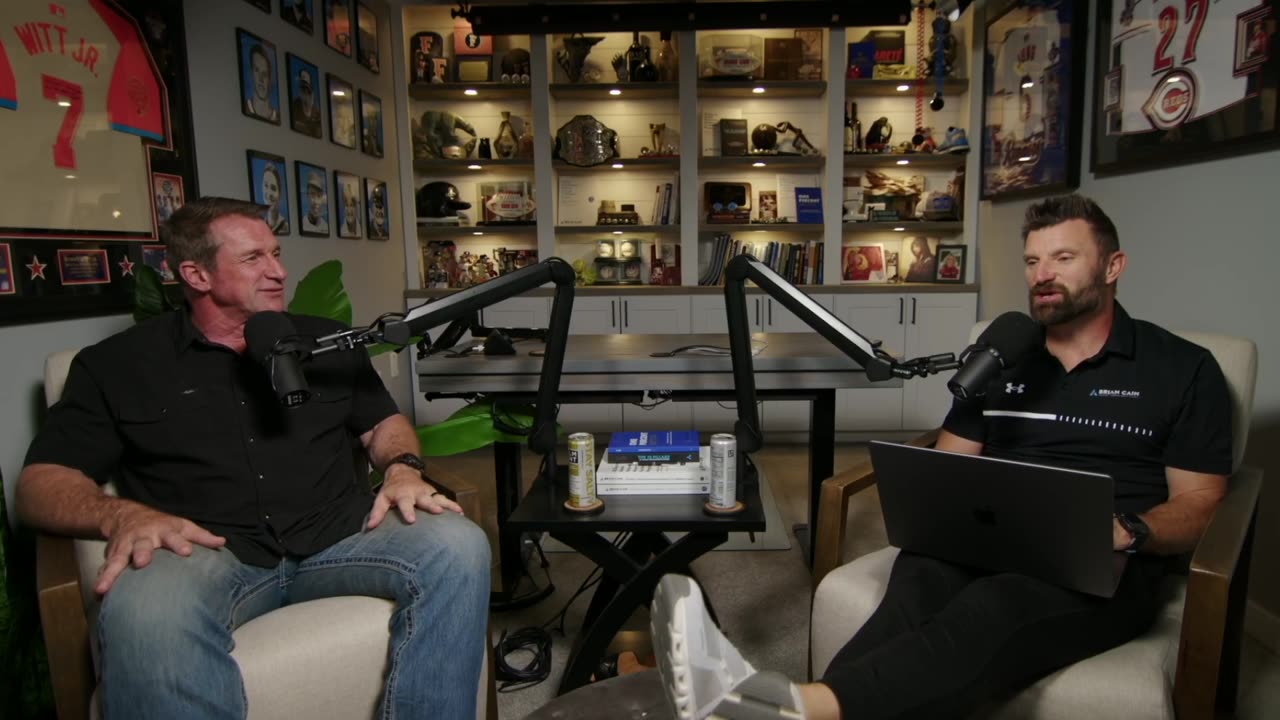
“Before or after the workout?” is one of the first questions every new plunger asks, and most of the internet answers it with whatever the last influencer did. So when Brian Cain, a mental performance coach who works with athletes and coaches, sat down with Dr. Kirk Parsley on his Mental Performance Mastery Podcast, we listened to every minute. Dr. Parsley is a former Navy SEAL and a physician, and by his own account spent a past life “diving in a lot of cold water.”
Below is what he said about the cold plunge, in his words, with the clips cued to the exact moment so you can hear it yourself. Then we checked each claim against the studies, and added what we have learned from our own time in cold water.
The one thing he calls “pretty well settled”
Dr. Parsley is careful about evidence through the whole episode. He says more than once that nobody knows the perfect protocol for everyone, and that it is easier to prove people feel recovered than to prove they gained more. So when he calls something settled, it stands out:
“The one piece of information that we do know that is pretty well settled is that if you use a cold plunge immediately after your workout for recovery, it will reduce your ability to make strength and muscle gains from your workout.”
Dr. Kirk Parsley, on Brian Cain’s podcast
His explanation: the hours after a hard lift are when your muscles run the rebuilding program (he names mTOR signaling, satellite cells and new nuclei in the muscle fibers). Cold, right then, turns that program down. “So if you’re doing strength or hypertrophy work, it seems to interfere with that.”
What the research says
He’s right about the direction, and about the mechanism. In a 12-week trial in the Journal of Physiology, 21 active men lifted twice a week and finished each session with either 10 minutes of cold water or an easy bike ride. The bike group gained more strength and more muscle: type II muscle fibers grew 17% and the fibers added 26% more nuclei, while the cold group gained neither. A 7-week trial measured the signal Dr. Parsley names: after 15 minutes at 50°F, mTORC1 signaling was blunted and fast-twitch fiber growth was smaller. Two studies that put one leg in cold water and the other in warm water after the same workout found less muscle protein built in the cold leg and less blood reaching the cold muscle for at least three hours.
Pooled across studies, a 2024 meta-analysis of 8 studies found the cold groups added less muscle (an effect size of 0.14 against 0.36 for lifting alone), and a 2021 meta-analysis found regular cold plunges after training reduced strength gains. A 2026 umbrella review of 15 meta-analyses reached the same conclusion. Strength is a little less consistent than size (the 7-week trial saw similar strength gains), and the review authors rate the overall certainty as low, mostly because the studies are small. But no trial points the other way.
One honest gap: every study that found the blunting put people in cold water within minutes of lifting. Nobody has tested whether waiting a few hours fixes it, and blood flow to cooled muscle stays low for at least three. So “before, or on a different day” is the safe reading.
His fix: move the plunge in front of the workout
“So the solution to that is to do your cold plunge before you do that work.”
Dr. Kirk Parsley, on Brian Cain’s podcast
He goes further than “it doesn’t hurt.” He thinks a plunge before strength or power work raises what you can put out, through the adrenaline rush (he lists cortisol, epinephrine and norepinephrine) carrying into the session. His evidence is personal, and he says so: he keeps a hand dynamometer, the little grip-strength gauge physical therapists use, and tests himself after plunging.
“If I do a cold plunge and then I do that, the PSI goes up 15 to 20 every time. I have not figured that out other than just adrenaline.”
Dr. Kirk Parsley, on Brian Cain’s podcast
What the research says: plunging first avoids the problem above, and that part is solid. The strength boost is his experience, not a finding yet. Cold muscle is weaker until it rewarms: classic lab work found strength and power drop about 4 to 6% for every 1°C (1.8°F) fall in muscle temperature, and hands dipped in 41°F water gripped 13 to 16% weaker. One small 2025 study did find trained lifters handled slightly more load after a 5-minute plunge at 50°F, which is the first data in his favor. If you try it, test yourself the way he does: same gauge or same lift, same warm-up, a few weeks, with and without the plunge.
Then warm up. You have more time than you think.
Brian pushed back with the thing every coach has heard: you can’t go into a workout cold or you’ll get hurt. Dr. Parsley’s answer is to warm up after the plunge, and to give the warm-up real time. After about five minutes in water around 40°F, he says:
“The temperature of your limbs at the very least, but probably your core temperature will stay a little bit lower for probably an hour to two hours. So you still have time to warm up, stretch out, do your normal stuff.”
Dr. Kirk Parsley, on Brian Cain’s podcast
The studies agree. In pooled data from 157 people, the biggest gap in core temperature after a cold bath showed up about 60 minutes later, not right away. That is the “afterdrop”: cold blood from your arms and legs keeps flowing back to your core after you get out. Another trial found gut temperature still almost 2°F low 40 minutes after a 15-minute bath at 50°F. Since cold muscle is weaker and slower, a real warm-up (which improves performance in most studies) is how you get your power back before the first heavy set.
If you need a long warm-up before you feel human after a plunge, he offers an easy out at the end of the episode: plunge first thing in the morning, go about your morning, and train later. “That’s fine too.”
Aerobic work is a different story
Brian asked about the football programs that end practice with whole teams in giant cold tubs. Dr. Parsley’s answer splits the goals apart:
“It doesn’t interfere with aerobic activity, aerobic fitness, and it probably is not interfering with skill.”
Dr. Kirk Parsley, on Brian Cain’s podcast
The research agrees with him. The 2021 meta-analysis found regular cold plunges had no effect on gains in maximal aerobic power or time-trial performance. In a 6-week interval training study, cold baths after every session changed nothing in VO2max, a 2 km time trial or mitochondrial markers, and a 4-week trial even found more mitochondrial building signals in the cooled leg.
How long to stay in
“It’s like three to five minutes for most people if you’re doing it pre-workout. If you’re just doing it to wake up, you only need a minute in those things.”
Dr. Kirk Parsley, on Brian Cain’s podcast
And one rule he is firm about, even though he is happy to see people turn the sauna up over time: don’t chase longer plunges. “Even if you do feel like you can, just don’t increase them.”
Three to five minutes sits right where the research on how you feel was done. A 2026 randomized trial found 5 minutes in 57°F seawater lifted mood as much as 20 minutes, and the Copenhagen winter swimmers in a well-known 2021 study averaged about 1.4 minutes per dip and 11 minutes a week. The first minute is the hard part at any temperature: water at 50 to 60°F triggers the gasp about as hard as near-freezing water, and colder water mostly makes the shock last longer. There is no evidence that longer plunges add benefit. More: how long to cold plunge.
For reference, the residential chillers we have supported typically hold the low to mid 40s°F, and one owner keeps his at 45°F straight through a New England winter. That is right around the 40°F Dr. Parsley mentions. Colder isn’t required to get the effect.
His own week
When he had a cold plunge at home, Dr. Parsley used it two to three days a week and the sauna four to five, “purely based on the type of workouts that I do.” He’s clear that it is his routine, not a prescription. And a surprise from a former SEAL: the sauna is the harder one for him. He credits years of diving in cold water. The plunge just doesn’t give him the jolt it gives most people.
Put it on your calendar
When to cold plunge, by training goal
| Your goal that day | When to plunge | Why |
|---|---|---|
| Strength or muscle (lifting) | Before the session, or in the morning if you train later | A plunge in the hours after lifting blunts the gains; before, it doesn’t, and the adrenaline may help |
| Running, cycling, rowing (aerobic) | Before or after, whichever you prefer | Dr. Parsley: timing doesn’t matter for aerobic fitness. |
| Feeling fresh tomorrow (games, tournaments, two-a-days) | After is fine | Cold water reduces soreness; when the next session matters more than long-term gains, that trade is worth it |
| Rest day | Any time | No session to interfere with. A morning plunge is a strong wake-up |
| Sauna day | Cold first, then sauna, or alternate rounds | Dr. Parsley: after a plunge, most people can sit at 200°F for 20 minutes and feel fine. Heat and cold order |
Brian’s recap, in 60 seconds
Brian closed the sauna and cold plunge part of the episode by reading it back. Sauna: about 20 minutes after the workout, at a heat that is challenging but tolerable, starting around 165°F. Cold plunge: not immediately after a workout if you want strength or muscle, three to five minutes, and timing doesn’t matter if you are training aerobic fitness. Then Dr. Parsley’s last word on it:
“But there are benefits to recovery with cold plunge if it’s done before the exercise.”
Dr. Kirk Parsley, on Brian Cain’s podcast
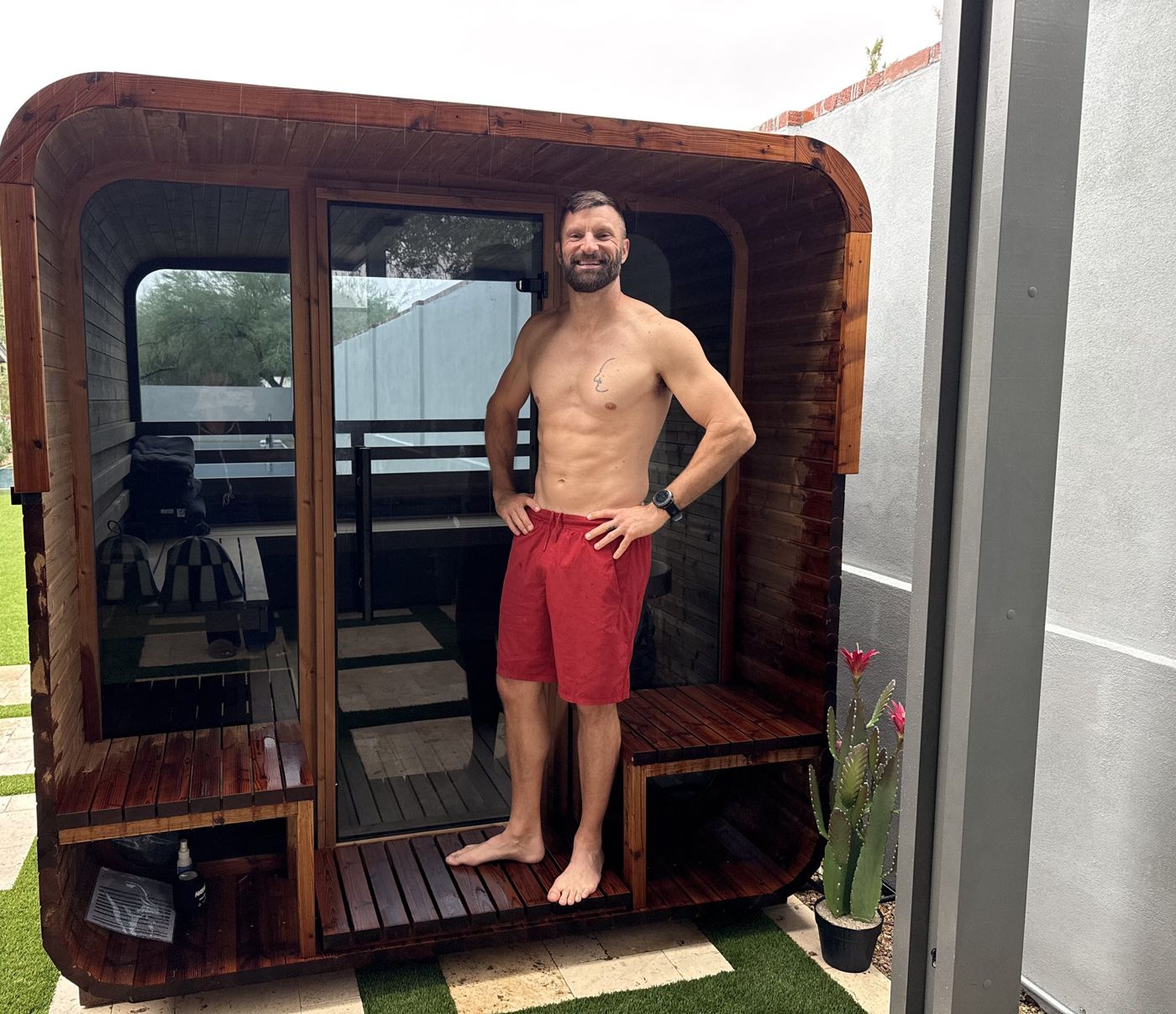
The sauna half of the conversation (how hot, how long, and why you shouldn’t compare yourself with anyone’s 220°F post) is written up in detail by our sister site, Sauna Marketplace, which supplied Brian’s backyard sauna: Brian Cain’s sauna, and Dr. Kirk Parsley on heat and cold. The back third of the episode moves on to caffeine timing and sleep; we cover the cold plunge and coffee part in the morning cold plunge.
Safety first
Cold water hits your breathing and heart rate hard in the first minute, which is why the warnings matter more than the protocol. Talk to your doctor first if you have a heart condition, high blood pressure or Raynaud’s, are pregnant, or take medication that changes how you handle cold. Never plunge alone in deep or open water, and never after drinking. Read the real dangers of cold plunging and how cold your plunge should be.
FAQ
Should you cold plunge before or after a workout?
Before, if the workout is strength or muscle building. A plunge in the hours after lifting blunts strength and muscle gains, which Dr. Kirk Parsley calls “pretty well settled” and controlled trials support. After aerobic training, or when you need to feel fresh for the next day more than you need maximum gains, after is fine.
Does an ice bath after a workout kill gains?
It doesn’t erase them, but regular plunges right after strength training reduce how much strength and muscle you gain over weeks. In the studies, people who took a 10 to 15 minute cold bath after each lifting session for 7 to 12 weeks gained less muscle, and usually less strength, than people who cooled down without cold water.
How long after lifting should I wait to cold plunge?
No study has tested a safe waiting period. Every trial that found blunted gains used cold within minutes of lifting, and blood flow to cooled muscle stayed low for at least three hours. The safe choices are to plunge before you lift, first thing in the morning, or on a rest day.
How long should a cold plunge be before a workout?
Dr. Parsley’s number is three to five minutes for most people before a workout, and about one minute if you only want to wake up. He advises against stretching plunges longer over time.
Is it bad to work out right after a cold plunge?
Not if you warm up. Dr. Parsley says a five-minute plunge near 40°F leaves your limbs, and probably your core, slightly cooler for an hour or two, so ease into the session with a real warm-up. If that is a hassle, plunge in the morning and train later.
Does a cold plunge make you stronger before lifting?
Dr. Parsley says his grip reads 15 to 20 pounds higher after a plunge, which he puts down to adrenaline. That is his own informal test. Controlled studies show cooled muscle is weaker until it rewarms, and one small 2025 study found a slight boost after a 5-minute plunge. Warm up after the plunge and judge it by your own numbers.
Sources
- Roberts LA et al. Post-exercise cold water immersion attenuates acute anabolic signalling and long-term adaptations in muscle to strength training. J Physiol, 2015. Source
- Fyfe JJ et al. Cold water immersion attenuates anabolic signaling and skeletal muscle fiber hypertrophy, but not strength gain, following whole-body resistance training. J Appl Physiol (1985), 2019. Source
- Fuchs CJ et al. Postexercise cooling impairs muscle protein synthesis rates in recreational athletes. J Physiol, 2020. Source
- Betz MW et al. Postexercise Cooling Lowers Skeletal Muscle Microvascular Perfusion and Blunts Amino Acid Incorporation into Muscle Tissue in Active Young Adults. Med Sci Sports Exerc, 2025. Source
- Piñero A et al. Throwing cold water on muscle growth: a systematic review with meta-analysis of the effects of postexercise cold water immersion on resistance training-induced hypertrophy. Eur J Sport Sci, 2024. Source
- Malta ES et al. The Effects of Regular Cold-Water Immersion Use on Training-Induced Changes in Strength and Endurance Performance: A Systematic Review with Meta-Analysis. Sports Med, 2021. Source
- Berjisian E et al. Strategic Application of Post-exercise Cold-Water Immersion to Enhance Performance Recovery and Adaptation: An Umbrella Review of 15 Published Systematic Reviews with Meta-analysis. Sports Med Open, 2026. Source
- Bergh U et al. Influence of muscle temperature on maximal muscle strength and power output in human skeletal muscles. Acta Physiol Scand, 1979. Source
- Vincent MJ et al. The effects of cold immersion and hand protection on grip strength. Aviat Space Environ Med, 1988. Source
- Tillaar RVD et al. The Acute Effect of Warm-Up with Cold Water Immersion upon Calf Raise Performance, Muscle Tension, and Oxygen Saturation. J Funct Morphol Kinesiol, 2025. Source
- Stephens JM et al. Core Temperature Responses to Cold-Water Immersion Recovery: A Pooled-Data Analysis. Int J Sports Physiol Perform, 2018. Source
- Giraud D et al. Mechanism involved of post-exercise cold water immersion: Blood redistribution and increase in energy expenditure during rewarming. Temperature (Austin), 2024. Source
- Fradkin AJ et al. Effects of warming-up on physical performance: a systematic review with meta-analysis. J Strength Cond Res, 2010. Source
- Broatch JR et al. Cold-water immersion following sprint interval training does not alter endurance signaling pathways or training adaptations in human skeletal muscle. Am J Physiol Regul Integr Comp Physiol, 2017. Source
- Ihsan M et al. Regular postexercise cooling enhances mitochondrial biogenesis through AMPK and p38 MAPK in human skeletal muscle. Am J Physiol Regul Integr Comp Physiol, 2015. Source
- Kelly JS et al. Improved mood following cold-water immersion: a comparison of differing exposure durations. Lifestyle Medicine, 2026. Source
- Søberg S et al. Altered brown fat thermoregulation and enhanced cold-induced thermogenesis in young, healthy, winter-swimming men. Cell Rep Med, 2021. Source
- National Weather Service. Cold water hazards and safety. Source